How Much Does Water Damage Restoration Cost in the DFW Area?

June 25, 2026

Water damage restoration in the Dallas-Fort Worth area typically costs between $1,500 and $8,000 for a standard residential job, with most Tarrant County homeowners paying $2,500 to $5,000 for a clean-water pipe break or appliance leak - though larger events, contaminated water, or slab foundation complications can push costs significantly higher.


This is the number every homeowner wants upfront, but the honest answer is that restoration costs vary substantially based on the water source, the size of the affected area, how long the water sat before mitigation began, and structural factors specific to DFW homes. Understanding what drives cost helps you evaluate quotes, have a better conversation with your insurance adjuster, and know what's reasonable versus what isn't.


The Major Cost Categories in Water Damage Restoration

Emergency Water Extraction: $300 - $1,500+

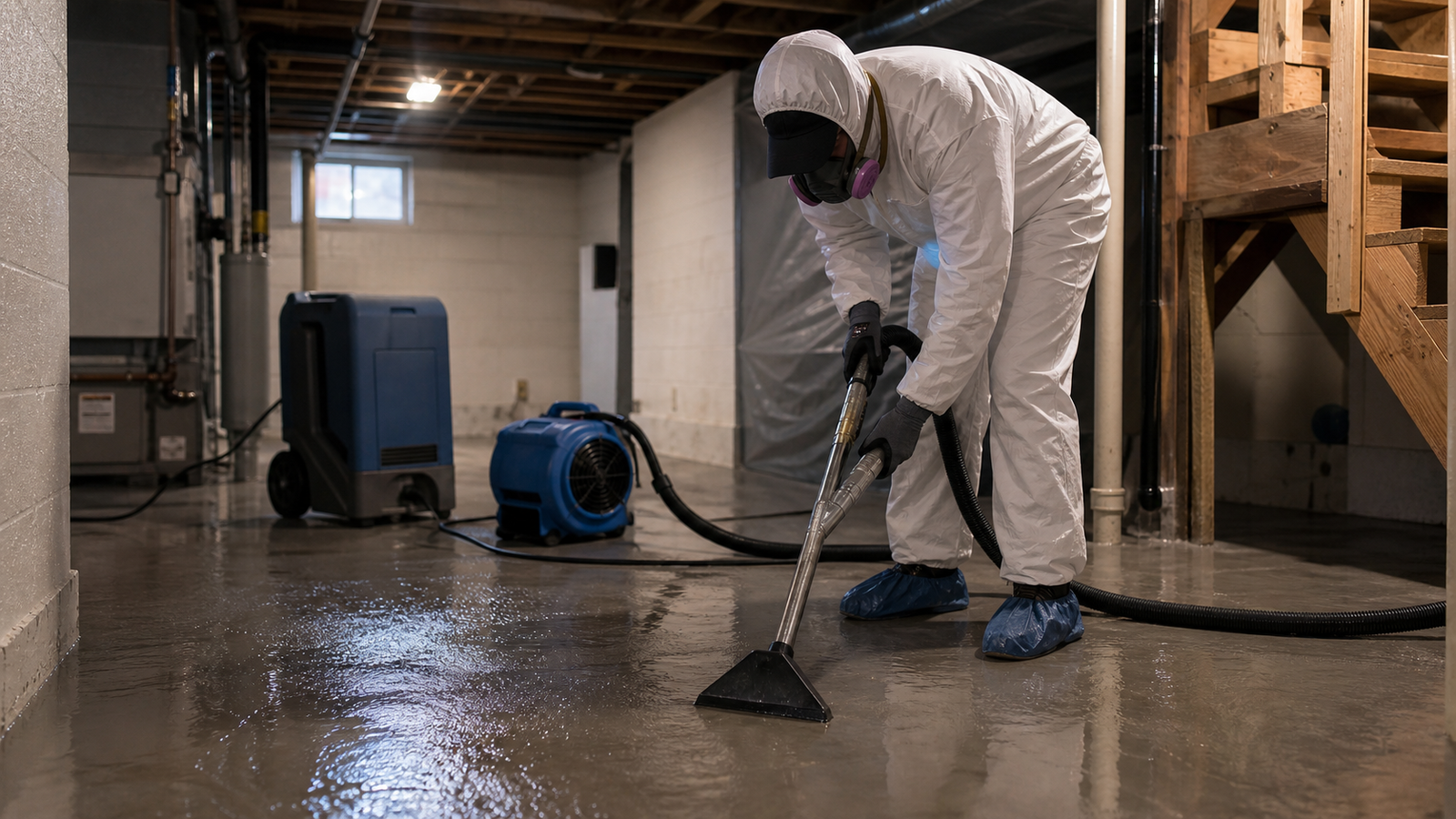
The first phase is removing standing water from the structure. Cost depends on the volume of water, the number of affected rooms, and the equipment needed. A single flooded bathroom runs significantly less than a whole-ground-floor event. Truck-mounted extractors handle large volumes faster, but are priced accordingly.


Structural Drying: $700 - $2,500+

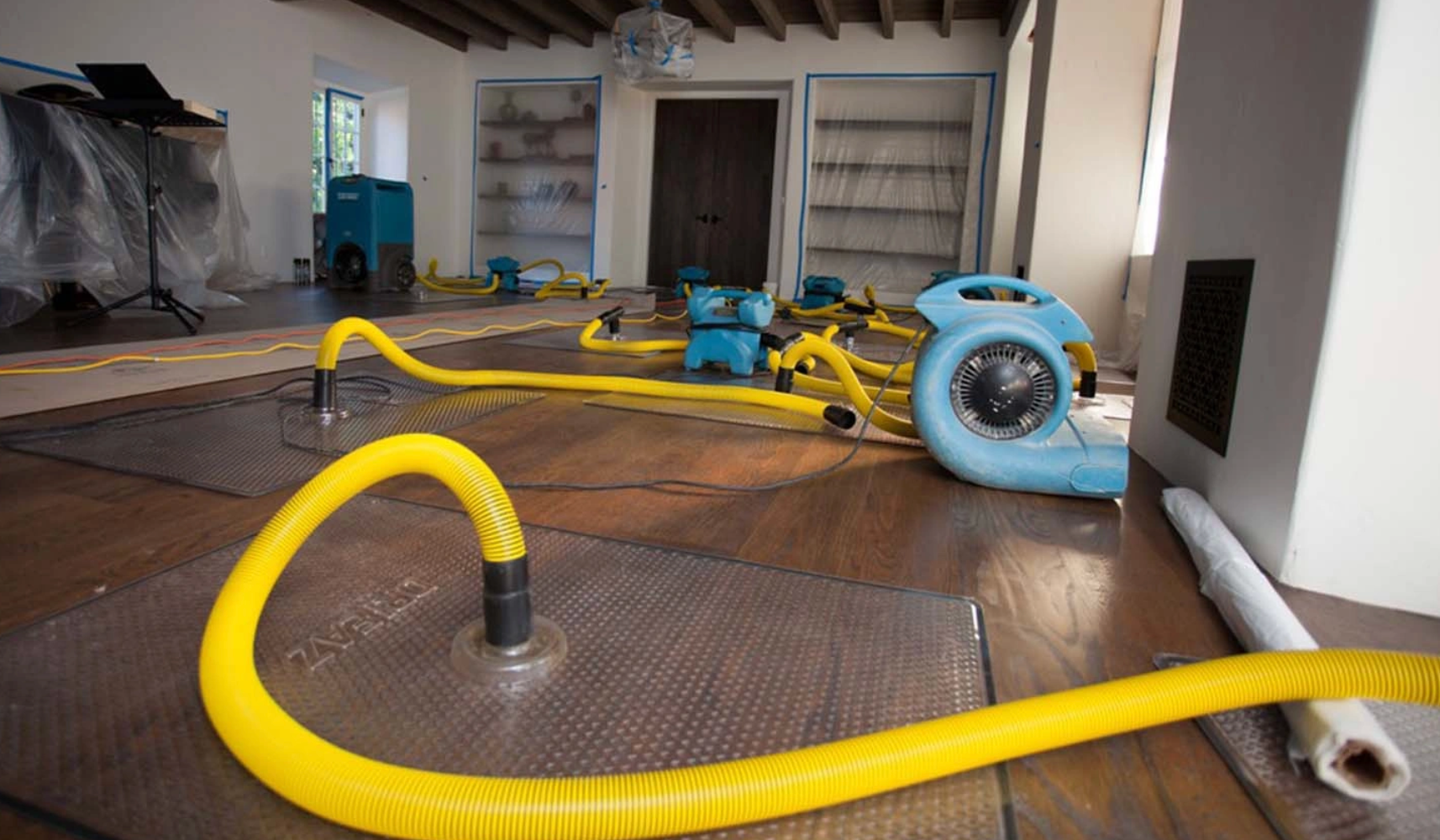
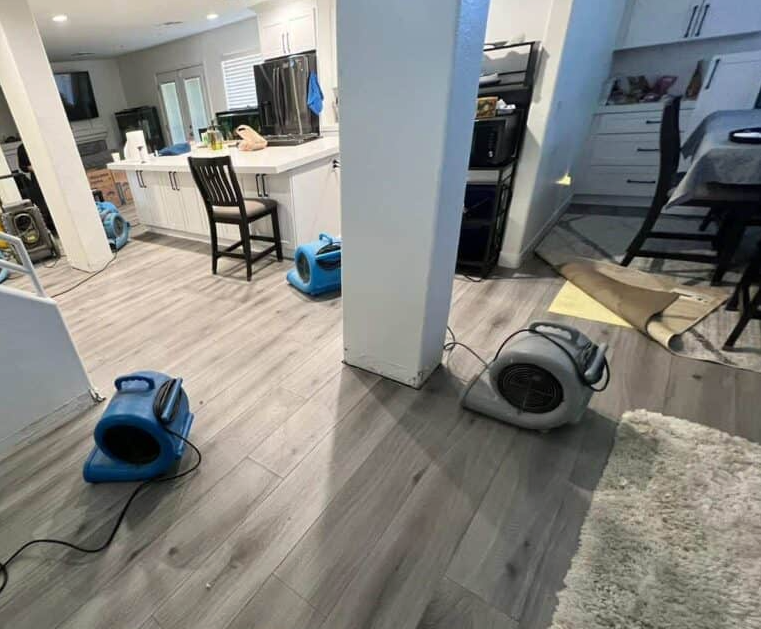
After extraction, industrial air movers and commercial-grade dehumidifiers are placed throughout the affected area and monitored daily with moisture meters. Drying takes 3 to 5 days in most Tarrant County residential scenarios, though DFW's hot, humid summers can affect drying times - high ambient humidity slows moisture evaporation from walls and subfloors, sometimes requiring more equipment or more days on the job.


Drying costs depend on equipment count (how many affected rooms and building cavities require air movers) and rental duration. A job requiring 8 air movers and 2 dehumidifiers for 4 days runs roughly $1,200-$1,600 in equipment costs alone, before labor.


Demolition and Removal: $500 - $2,000+

Any building material that has absorbed water beyond drying thresholds - saturated drywall, wet insulation, warped baseboards, soaked flooring - needs to be removed before reconstruction. This is where homeowners often underestimate scope. A single water event commonly requires removal of 4-foot high drywall along all affected walls, removal of batt insulation from wall cavities, and removal of wet flooring in affected rooms.


Reconstruction: $1,000 - $5,000+

After drying is confirmed complete through final moisture readings, the structural rebuild begins - new drywall, insulation, painting, flooring, and millwork. Reconstruction is often covered under your insurance dwelling coverage, subject to your deductible. In Tarrant County's housing stock, where many homes were built in the 1970s-1990s with materials that may no longer be standard, matching existing finishes can add to reconstruction costs.


DFW-Specific Cost Factors

Slab Foundation Complications

The majority of homes in Hurst, Fort Worth, Arlington, and across Tarrant County are built on slab foundations rather than raised floors with crawl spaces. This has significant implications for water damage cost. When a pipe leaks under a slab, water often spreads laterally across the entire slab before finding a path to escape - which means flooring throughout a large area may be affected even when the actual pipe break is in one small location. Detecting and drying under-slab moisture requires specialized equipment and may extend the drying phase.


In some cases, a slab leak requires saw-cutting into the concrete to access and repair the pipe - a separate plumbing cost that runs $1,500-$4,000 and is typically covered under your homeowners policy when the leak was sudden and undetected.


AC Condensate Drain Issues (Summer Season)

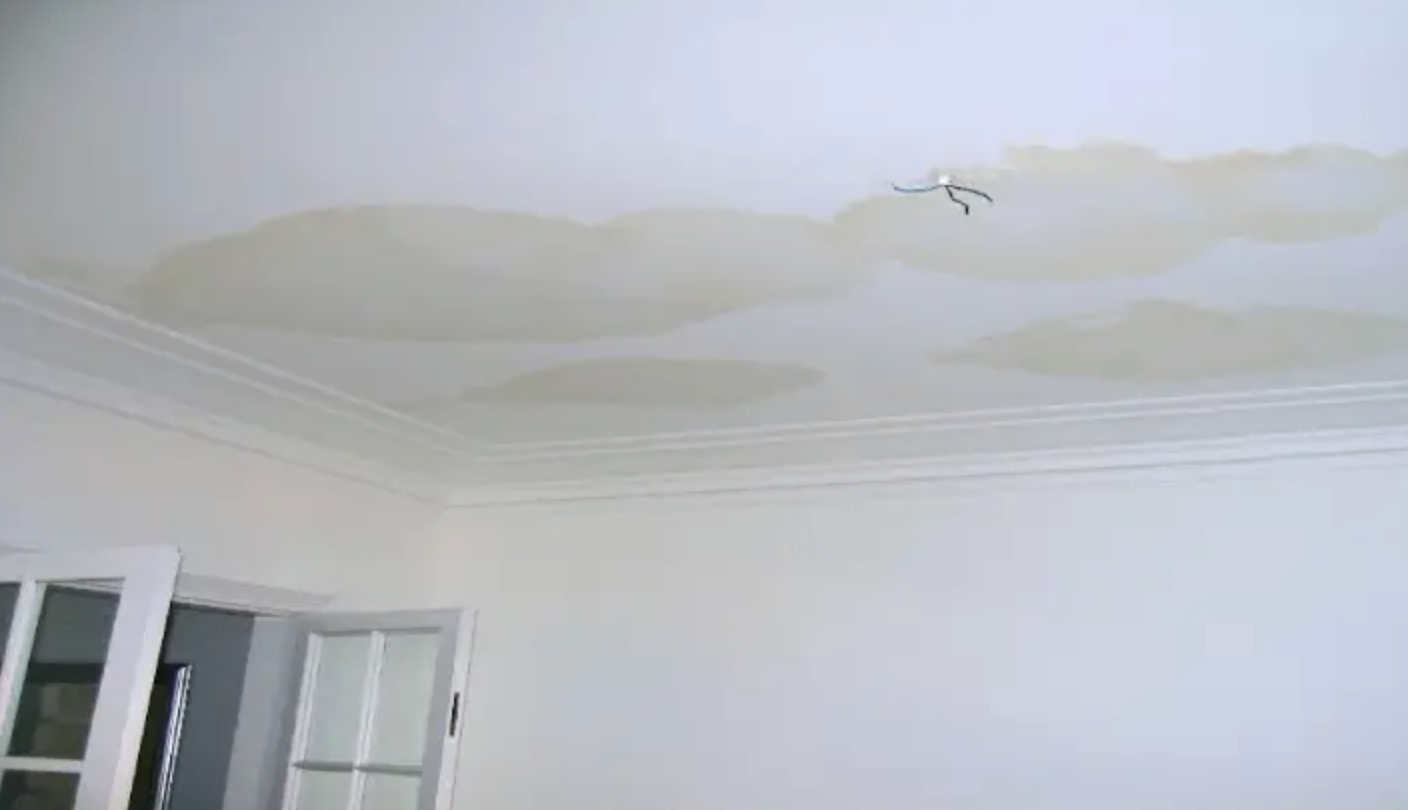
DFW summers push AC systems hard, and condensate drain pan overflows are a common cause of ceiling and wall water damage across Tarrant County during peak cooling season. When an AC condensate drain clogs - often from algae growth in the humid Texas climate - the overflow pan fills and water begins saturating the ceiling drywall below the air handler. This typically affects the ceiling, insulation in the attic or ceiling cavity, and the room below. Costs for AC condensate water damage typically run $1,200 to $3,500 depending on how long it was overflowing before discovery.


Clay Soil Movement

Tarrant County sits on some of the most expansive clay soil in the country. As this soil absorbs water and swells, it exerts pressure on foundations and can create hairline cracks in slab foundations over time. Exterior water intrusion through foundation cracks is not covered by standard homeowners insurance (it's groundwater intrusion, not an internal plumbing failure) but it is a real source of water damage for homeowners in the area. Identifying whether moisture entry is from a plumbing source or from soil/foundation movement is an important early step in any DFW water damage assessment.


Water Category: The Most Important Cost Driver

Restoration cost is dramatically affected by the contamination level of the water involved:


Category 1 - Clean Water

From a supply line, water heater, or clean appliance. The least expensive to remediate - standard extraction and drying applies. No special decontamination required for structural materials in most situations. Average DFW residential job: $1,500-$4,000

Category 2 - Gray Water

From washing machine overflows, dishwasher backups, or toilet overflows without solid waste. Contains biological contaminants that require antimicrobial treatment of all affected surfaces. Structural materials in contact with gray water require more careful evaluation for removal. Average DFW residential job: $2,500-$6,000

Category 3 - Black Water

Sewage backups, flooding from outside the structure, or water that has been sitting for more than 48-72 hours and become biologically active. All porous materials in contact with Category 3 water must be removed - there's no safe drying option. This is the most expensive category by a significant margin. Average DFW residential job: $4,000-$12,000+


Typical Scenario Cost Ranges for Tarrant County Homeowners

  • Washing machine supply line failure, kitchen hardwood flooring affected: $2,000-$3,500
  • Burst pipe in master bath, two rooms affected with slab dry-out: $3,000-$5,500
  • Water heater failure, utility room and hallway carpet, drywall damage: $2,500-$4,500
  • AC condensate overflow through ceiling into bedroom below: $1,500-$3,000
  • Toilet overflow (Category 2), bathroom and hallway: $2,800-$5,000
  • Sewage backup (Category 3), multiple rooms: $5,000-$15,000+
  • Winter Storm Uri-type burst pipe, major multi-room event: $8,000-$20,000+


Does Insurance Cover This?

If your water damage was sudden and accidental - a pipe burst, appliance failure, or storm-related roof leak - your Texas homeowners policy generally covers both the mitigation (extraction and drying) and the reconstruction, subject to your deductible. The restoration company's documentation - moisture readings, scope of loss reports, drying logs - is what supports your claim payment.


Under Texas Insurance Code Chapter 542, your insurer is required to respond to your claim promptly and pay accepted claims within specific timeframes. A properly documented claim from a certified restoration company moves through the process significantly faster than an undocumented one.


See our related guide: Does Homeowners Insurance Cover Water Damage in Texas?


Getting an Accurate Water Damage Estimate

Any reputable water damage company should provide you with a written, itemized estimate before work begins - not a round number over the phone. The estimate should include extraction costs, equipment rental, drying monitoring, demolition scope, and a preliminary reconstruction estimate. All of these categories should be documented separately, because they correspond to separate line items on your insurance claim.


United Cleaning & Restoration has been serving Tarrant County homeowners since 1979. Our estimates are thorough, our documentation satisfies insurance adjusters, and we don't begin work until you understand exactly what's being done and why.


Call (817) 268-6531 for a free on-site assessment across Hurst, Fort Worth, Arlington, Bedford, Euless, North Richland Hills, Haltom City, Colleyville, and Watauga. Available 24/7 for emergency response.


Learn more about our water damage restoration services and reconstruction capabilities.
July 21, 2026
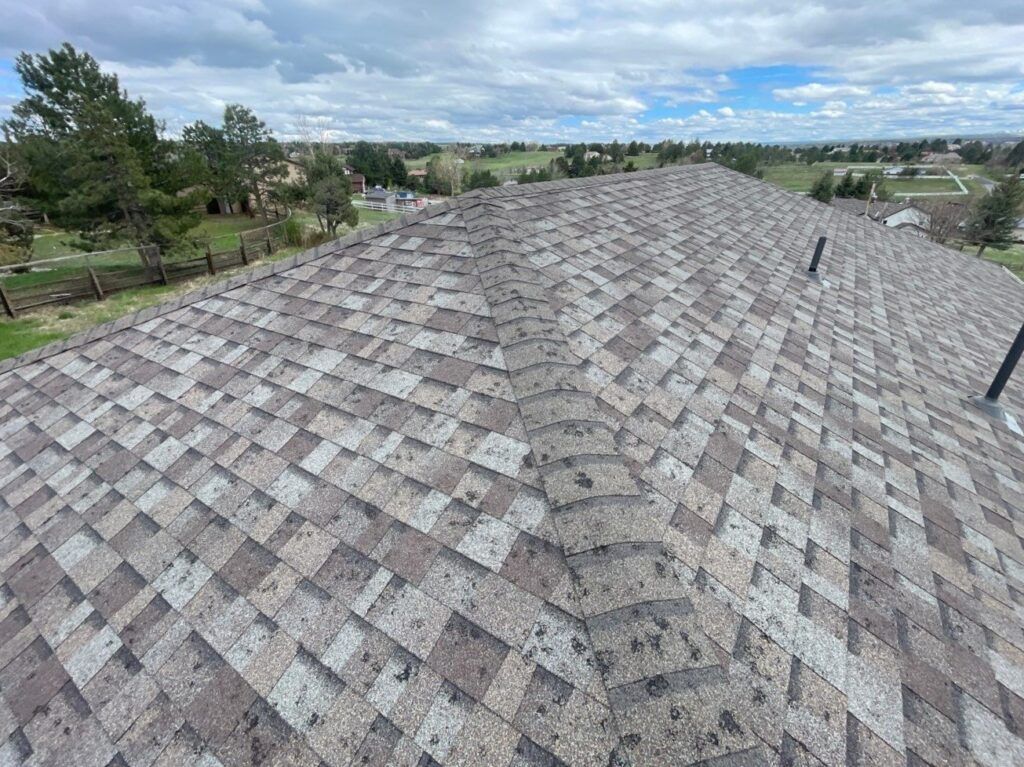
Hail and storm damage in Tarrant County requires two things within 48 hours: emergency temporary protection and professional interior water damage mitigation.
July 10, 2026
A sewage backup in your home is a Category 3 biohazard emergency — call United Emergency Restoration to help with your sewage issue today!
July 1, 2026
After a house fire in Texas, don't re-enter the structure until the fire department has officially cleared it as safe. See here for more details!
June 20, 2026
You may have mold inside your walls if you notice a persistent musty odor that doesn't go away with cleaning, visible discoloration or staining on drywall.
June 15, 2026
When you discover water damage at home, stop the water source immediately if it's safe to do so, then call a certified water damage restoration company.
June 10, 2026
Homeowners insurance in Texas covers sudden and accidental water damage - such as a burst pipe, appliance failure, or roof leak from a storm.
May 21, 2026
One of the common questions we get is when should you clean your air ducts? It is highly recommended that you give us a call about it as each job is different.
May 20, 2026
Is there an unwanted smell in your home? Wondering why your house smells like soemthing died? Call our professional odor removal team today to handle the job.
May 19, 2026
Are you worried about mold and wanting to uncover the early signs of mold in your house? Look at our guide here, we'll be able to help you. Call our team today!
April 10, 2026
Sleeping in a house with active water damage is not recommended — within 24 to 48 hours of a water event, airborne mold spores, bacteria, and microbial volatile organic compounds (MVOCs) begin circulating through your home's air supply, creating real health risks for anyone sleeping or breathing in the affected space. In Hurst and Fort Worth, where humidity accelerates that timeline, the window to act safely is even shorter. Is It Safe to Stay in a House After Water Damage? Staying in a water-damaged home is only safe when the affected area is fully contained, the moisture source has been stopped, and professional drying equipment is actively reducing humidity levels throughout the structure. Without those three conditions met simultaneously, your home's air quality degrades quickly. HVAC systems running in a water-damaged home don't dry it out — they redistribute contaminated air and mold spores into every room, including the bedrooms where your family is sleeping. What Makes Water-Damaged Air Dangerous to Breathe? Water-damaged air becomes hazardous when mold colonies begin off-gassing MVOCs — invisible gases that cause respiratory irritation, headaches, and fatigue even before visible mold growth appears. The specific health risks depend on the category of water involved. Restoration professionals classify water damage into three categories under IICRC S500 standards: Category 1 — Clean Water: From a supply line break or overflowing sink. Lowest immediate health risk, but degrades to Category 2 within 24 to 48 hours if left unaddressed. Category 2 — Gray Water: From appliance discharge, toilet overflow without solids, or sump pump failure. Contains biological and chemical contaminants. Elevated health risk, especially for children, elderly, and immunocompromised individuals. Category 3 — Black Water: From sewage backup, rising floodwater, or any Category 1 or 2 source left standing beyond 72 hours. Considered grossly contaminated. Sleeping in a home with Category 3 water damage is not safe under any circumstances. How Quickly Does Water Damage Become a Health Hazard? Clean water damage becomes a health hazard within 24 to 48 hours — which is faster than most homeowners expect and faster than any insurance adjuster's standard response timeline. In Hurst and the broader Fort Worth area, summer ambient humidity regularly exceeds 70%. That external moisture load combines with the water already in your structure to create conditions where mold activates, bacteria multiply, and air quality degrades far more rapidly than it would in a drier climate. Step-by-Step Homeowner Assessment: Should You Stay or Leave Tonight? Before you decide whether to sleep in your home, walk through this assessment. It takes less than 20 minutes and could protect your family from serious health exposure. How to Determine if Your Home Is Safe to Sleep In After Water Damage The answer comes down to three factors: the water category, the affected square footage, and whether your HVAC system is spreading contamination. Identify the water source and stop it first. Is the water clean (burst supply line), gray (appliance or toilet), or black (sewage or floodwater)? If you cannot identify the source or cannot stop it, leave immediately and call a professional. Estimate the affected area. A localized event — a single bathroom or small section of flooring — that has been stopped and dried within two hours carries lower risk than water that has spread across multiple rooms or penetrated walls and ceilings. Turn off your HVAC system. This is critical and almost always overlooked. A running HVAC system pulls air from the wet area and distributes it throughout your home. Turn it off at the thermostat immediately and leave it off until a professional has assessed the situation. Check for Category 2 or 3 indicators. Any dark discoloration in the water, foul or sewage odor , or water originating from outside your home or below grade should be treated as contaminated. Do not allow children or pets in the affected area. Check ceiling integrity in adjacent rooms. If water has penetrated a ceiling cavity, assess whether any ceiling sections look swollen, soft, or beginning to sag. A saturated ceiling can fail without warning — this is a physical safety hazard entirely separate from air quality. Assess your sleeping distance from the affected area. If bedrooms are on the opposite end of the home from a contained, clean-water event and the HVAC is off, sleeping in place may be acceptable for one night while you arrange professional response. If water has reached living areas, hallways, or is directly below or adjacent to bedrooms — leave. What a professional adds: Our technicians use calibrated moisture meters to establish exact moisture content readings throughout your structure, and FLIR thermal imaging to identify hidden wet areas inside walls and ceilings that are actively off-gassing into your living space. We can tell you within the first 30 minutes of an assessment whether your home is safe to occupy — and what it will take to make it safe if it isn't. The Hidden Danger: What Happens to Your Body Sleeping in a Water-Damaged Home Most homeowners underestimate the health risk because the damage isn't always visible — and because symptoms of mold and bacteria exposure are easy to misattribute to allergies, a summer cold, or poor sleep. Health Symptoms Caused by Sleeping in a Mold or Water-Damaged Environment Exposure to MVOCs, mold spores, and bacteria from water damage causes symptoms that typically appear within 24 to 72 hours of initial exposure — and worsen with every night spent in the affected environment. Common symptoms we hear from homeowners who delayed action include: Persistent headaches that improve when leaving the home and return upon coming back Worsening allergy or asthma symptoms, particularly at night and in the morning Unexplained fatigue, brain fog, or difficulty concentrating Eye, nose, and throat irritation that doesn't respond to typical allergy medication Skin rashes or irritation with no other identifiable cause Recurring respiratory infections, especially in children Who Is Most Vulnerable to Water Damage Air Quality Risks? Children, elderly individuals, and anyone with asthma, allergies, or a compromised immune system face the highest risk from water-damaged air — and should leave the home immediately regardless of damage category or scale. Infants and young children breathe at a higher rate than adults, increasing their exposure volume per hour. Elderly individuals and those on immunosuppressive medications may experience severe respiratory responses to mold exposure that healthy adults would only experience as mild irritation. If anyone in your household falls into these categories, do not wait for a professional assessment before making alternate sleeping arrangements. The Long-Term Risk Nobody Talks About: Mycotoxin Exposure Beyond the immediate respiratory risks, certain mold species that thrive in water-damaged Texas homes — including Stachybotrys chartarum, commonly called black mold — produce mycotoxins that accumulate in the body with repeated exposure. Mycotoxin-related illness is difficult to diagnose, often mimics chronic fatigue syndrome or autoimmune conditions, and can persist long after the mold source is remediated. This is not a risk worth taking for the sake of avoiding a hotel stay. The Insurance Truth: Displacement Coverage You May Not Know You Have Many homeowners stay in a dangerous environment simply because they don't realize their insurance policy may cover the cost of leaving. Does Homeowners Insurance Pay for a Hotel During Water Damage Remediation? Most standard homeowners insurance policies include Loss of Use or Additional Living Expenses (ALE) coverage — which pays for hotel stays, meals, and other costs when your home is uninhabitable due to a covered loss. Here is what you need to know to access that coverage: ALE is triggered by uninhabitability — not just inconvenience. A professional remediation company's written assessment stating the home is unsafe to occupy is typically what unlocks this coverage. Document everything from day one. Hotel receipts, restaurant receipts, and any out-of-pocket costs incurred because of displacement are all potentially reimbursable — but only if documented properly from the start. Your insurer does not proactively tell you about ALE . In our experience working claims throughout the DFW Metroplex, a significant number of homeowners never file for displacement coverage they were fully entitled to, simply because no one told them it existed. Professional moisture documentation is what makes the case. Moisture meter logs, thermal imaging reports, and IICRC-compliant drying assessments from United Cleaning & Emergency Restoration create the paper trail your adjuster needs to approve both remediation costs and living expenses simultaneously. The bottom line: staying in a water-damaged home to save money may actually cost you money — because it forfeits the ALE coverage your policy already includes. Why Hurst and Fort Worth Homeowners Face Unique Water Damage Risks North Texas weather patterns, housing stock age, and infrastructure create a specific set of water damage scenarios that DFW homeowners face more often than most. Storm Season, Flash Flooding, and Category 3 Water Intrusion Hurst and Tarrant County sit in a region that experiences some of the most severe thunderstorm activity in the country — and flash flooding from those storms regularly introduces Category 3 groundwater into homes through foundation cracks, garage floors, and below-grade entries. Unlike a clean water supply line break, storm-driven groundwater carries agricultural runoff, lawn chemicals, bacteria, and sewage from overwhelmed municipal systems. A home that has taken on even a few inches of floodwater is a Category 3 environment — and no amount of DIY cleanup with fans and towels makes it safe to sleep in. The February Freeze Legacy: Hidden Pipe Damage Still Causing Problems The 2021 winter storm left thousands of North Texas homes with stress-fractured pipes that have been slowly failing ever since — and many homeowners don't discover the damage until a ceiling stain appears or a wall cavity becomes saturated enough to smell. If your home experienced any pipe issues during that event or any subsequent hard freeze, and you have noticed new musty odors, ceiling discoloration, or soft wall sections since then, there is a real possibility that an unresolved slow leak has been creating unsafe air quality in your home while you sleep. Your Family's Health Is Not Worth the Risk. Water damage moves fast — faster than insurance adjusters respond, faster than DIY fans can dry, and faster than most homeowners expect. Every night spent sleeping in an unassessed, water-damaged home is a night of compounding exposure for everyone under your roof. Don't guess with your family's health. Call United Cleaning & Emergency Restoration at 817-268-6531 for a free quote today. We're available 24/7 for emergency response, and we bring professional moisture metering, thermal imaging, and full insurance documentation to every job — serving Hurst, Fort Worth, and all of the DFW Metroplex.