Sewage Backup Cleanup in DFW: What to Do and What It Costs
A sewage backup in your home is a Category 3 biohazard emergency — all porous materials that came into contact with sewage water, including drywall, carpet, flooring, and insulation, must be professionally removed and disposed of rather than dried in place, because sewage contains bacteria, viruses, and parasites that make contaminated materials unsafe to leave inside a living space regardless of how thoroughly the surface is treated.
Sewage backups are one of the more alarming water damage events a Tarrant County homeowner can face — and one of the most mishandled. The instinct to mop it up, run fans, and spray disinfectant is understandable, but it's the wrong response. Understanding why sewage backup is in a separate category from other water damage — and what professional remediation actually involves — helps you protect your family, your home, and your insurance claim from the moment it happens.
What Causes Sewage Backups in Tarrant County Homes
Sewage backups occur when wastewater flows backward through drain lines rather than away from the home. In Tarrant County and across DFW, the most common causes are:
Aging sewer lines in established neighborhoods: Many homes in Hurst, Bedford, North Richland Hills, Richland Hills, and Haltom City were built in the 1960s through the 1980s. The clay or Orangeburg pipe sewer lines installed in these neighborhoods are decades past their design life — prone to cracking, collapse, and root intrusion that progressively constricts flow until the line fails entirely.
Heavy rain and storm events: Tarrant County's combined and aging sewer infrastructure can become overwhelmed during significant storm events. When stormwater enters the municipal sewer system faster than it can handle, sewage backs up through the lowest drain in the building — typically a floor drain, toilet, or shower in the lowest level of the home.
Root intrusion: DFW's large tree root systems — particularly live oaks and pecans common in established Tarrant County neighborhoods — actively seek out sewer line joints. Roots enter small cracks and expand over years, eventually blocking flow through the line entirely.
Grease accumulation: Grease, fats, and food solids accumulate in the lateral sewer line between the home and the municipal main. Over time, this buildup constricts the line until a backup occurs.
Sewer main blockages: When the municipal main line is blocked or backed up, multiple homes on a sewer trunk line can experience simultaneous backups. This is more common in older DFW infrastructure during peak storm season.
Why Sewage Backup Is Classified as Category 3 Water
The restoration industry classifies water damage in three categories based on contamination level:
Category 1 (Clean Water): Water from a clean supply source — a broken supply line, water heater failure, or clean appliance overflow. Lowest risk; can often be dried in place if addressed promptly.
Category 2 (Gray Water): Water with significant biological or chemical contamination — washing machine overflow, toilet overflow without solid waste, dishwasher backup. Requires more aggressive treatment but some materials may be salvageable with antimicrobial treatment.
Category 3 (Black Water): Water that is grossly contaminated — sewage backup, floodwater from outside the structure, or any water that has sat long enough to become biologically active. This category includes all sewage events, regardless of how small the backup appears on the surface.
Category 3 classification has a direct impact on what materials can legally and safely be left in your home. Under IICRC S500 restoration standards — the industry standard that Texas insurers and restoration companies follow — all porous materials that were in contact with Category 3 water must be removed. This means:
- Carpet and carpet pad — no exceptions, even with antimicrobial treatment
- Drywall below the flood line — typically cut at 12 to 24 inches above the highest water contact point to ensure complete removal of contaminated material
- Batt insulation inside affected wall cavities
- Hardwood flooring that absorbed sewage water
- Cabinets or millwork with particleboard or MDF components that absorbed contamination
Non-porous materials — concrete slab, ceramic tile, metal studs, PVC trim — can be cleaned and disinfected in place.
The Health Risks of Sewage Exposure
Sewage water contains a range of pathogens that pose genuine health risks:
Bacterial pathogens: E. coli, Salmonella, Shigella, and Campylobacter are present in raw sewage and cause gastrointestinal illness, some of which can become serious without treatment
Viral pathogens: Hepatitis A, norovirus, and other enteric viruses survive in sewage-contaminated materials for extended periods
Parasites: Cryptosporidium and Giardia are present in sewage and are particularly resistant to standard disinfectants
Mold growth: The organic material in sewage is a nutrient-rich environment for mold — Category 3 events that aren't remediated quickly can produce significant mold growth within 24 to 48 hours, compounding the remediation scope
Children, elderly family members, and anyone with compromised immune function are at significantly higher risk from exposure. Anyone who had contact with sewage water during the event should wash thoroughly and monitor for symptoms including gastrointestinal distress, fever, or skin rash.
What to Do Immediately When a Sewage Backup Occurs
Stop using water in the home. Running water anywhere in the structure — flushing toilets, running sinks, using the dishwasher — sends more water toward the blocked line and increases the volume of sewage in the affected area. Stop all water use immediately.
Don't go into the sewage water without protection. If you must enter the affected area, wear rubber boots and gloves as a minimum. Avoid touching your face. Sewage-contaminated water is not safe to wade through without protection.
Turn off the electricity in the affected area. If standing sewage water is near electrical outlets or appliances, shut off the circuit breaker for that area before anyone enters.
Ventilate the area if safe to do so. Open windows to the affected rooms to allow fresh air circulation. Do not run the HVAC system — it will distribute contaminated air and odors throughout the home.
Call a restoration company, not just a plumber. A plumber clears the blockage. A restoration company handles everything that happened after the sewage entered the home — the extraction, decontamination, removal of contaminated materials, antimicrobial treatment, drying, and reconstruction. You need both, but you need the restoration company working in parallel, not after the plumber finishes.
Call your insurance company to open a claim. Sewage backup coverage depends on your specific policy — call promptly regardless, as some policies have notice requirements.
What Professional Sewage Backup Remediation Involves
When United Cleaning & Restoration responds to a sewage backup, the process follows a specific sequence governed by IICRC standards:
1. Extraction and Containment
All standing sewage water is extracted using industrial equipment. The affected area is contained to prevent cross-contamination of unaffected portions of the home — establishing physical barriers and negative air pressure where needed to keep contaminated particles from spreading through the living space during the remediation process.
2. Removal of Contaminated Materials
All porous materials in the contamination zone are removed and disposed of in sealed bags according to biohazard disposal protocols. This includes carpet and pad, drywall to a defined cut line, insulation, and any other porous material with documented or probable sewage contact. This phase looks like significant demolition — it is necessary and required by both remediation standards and insurer expectations.
3. Antimicrobial Treatment
After material removal, all remaining structural surfaces — concrete slab, wall framing, subflooring — are treated with EPA-registered antimicrobial agents. This treatment is applied, allowed to dwell, and then documented with photos for the insurance claim record. HEPA vacuuming removes residual particulate matter from the structural surfaces.
4. Structural Drying
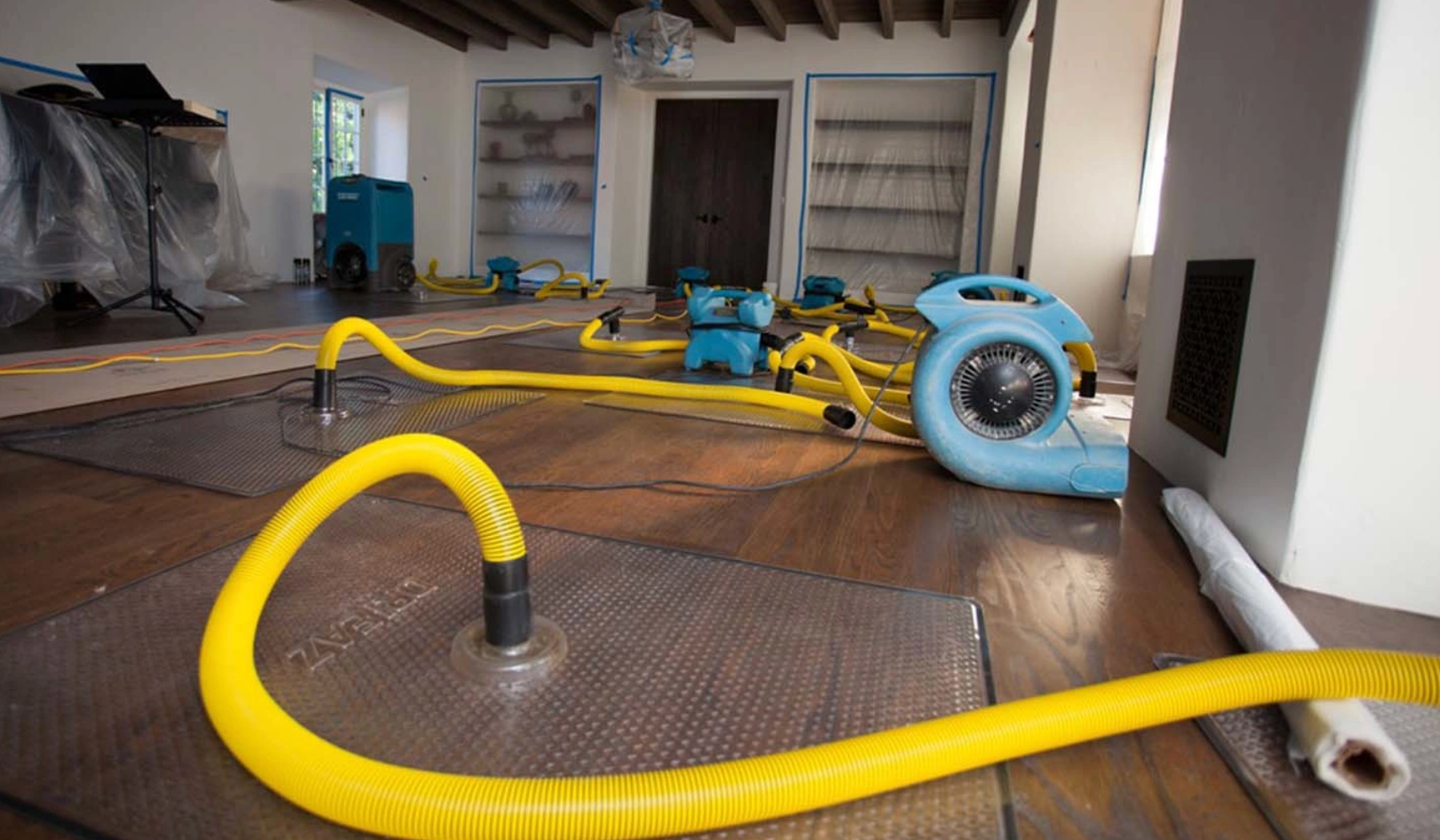
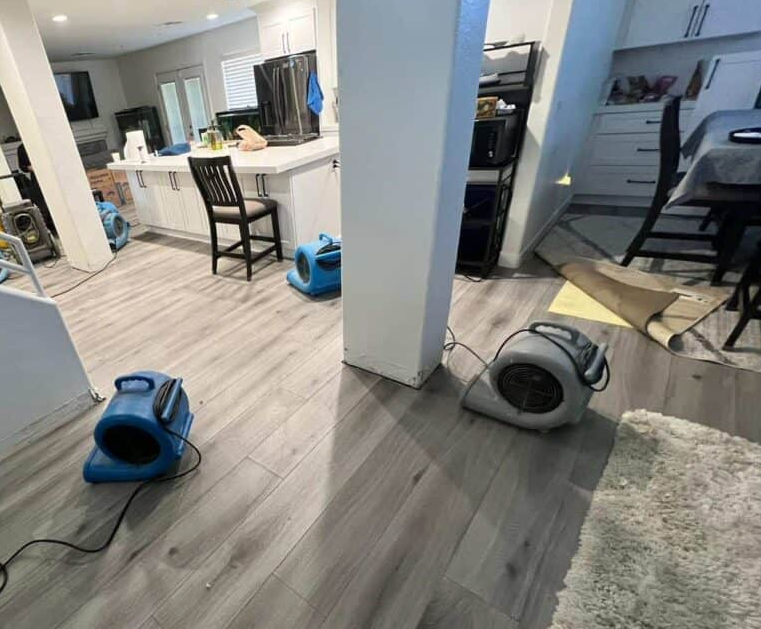
Following decontamination, industrial air movers and dehumidifiers are placed to dry the structural framing and concrete to pre-loss moisture levels. In DFW's warm, humid climate, drying is monitored daily with calibrated moisture meters and documented in a drying log — the same process used for any water damage event, with daily readings recorded for the insurance file.
5. Odor Remediation
Sewage events leave persistent odors in wall cavities and structural members even after complete decontamination of surfaces. Depending on scope, odor remediation may include thermal fogging or hydroxyl treatment to neutralize odor compounds in areas where surface cleaning alone doesn't reach.
6. Reconstruction
After clearance testing and confirmed moisture readings, reconstruction begins — new drywall, insulation, flooring, and finishes matching the pre-loss condition. For sewage backup events, reconstruction scope is typically defined by the material removal phase and submitted to the insurer as part of the complete scope of loss.
How Much Does Sewage Backup Cleanup Cost in the DFW Area?
Sewage backup remediation in Tarrant County typically costs between $2,500 and $10,000 for a standard residential event, depending on the volume of sewage water, the number and type of rooms affected, how long the water sat before professional response, and the extent of material removal required.
Representative cost ranges for common DFW sewage backup scenarios:
- Single bathroom floor drain backup, limited spread: $2,000-$4,000
- Toilet overflow with sewage, bathroom and adjacent hallway affected: $3,000-$5,500
- Sewer line backup with multiple drain overflow points, ground floor: $5,000-$10,000
- Sewer backup with spread into finished living areas, significant drywall removal: $6,000-$12,000+
- Full ground floor or basement event with major material removal: $10,000-$20,000+
The variable that most dramatically affects cost is how long the sewage water sat before professional remediation began. A backup that is called in within hours and responded to quickly has a narrower contamination zone and less material to remove. A backup that sat overnight while homeowners tried to manage it with household cleaning products has a significantly larger footprint.
Does Homeowners Insurance Cover Sewage Backup in Texas?
This is where many DFW homeowners are caught off guard: sewage backup is not covered under most standard Texas homeowners policies. A standard HO-3 policy covers sudden and accidental water damage from inside the home — but sewage backup is specifically excluded from the base policy in most cases.
Coverage for sewage backup requires a separate endorsement — variously called a "sewer backup endorsement," "water backup and sump pump overflow endorsement," or similar language depending on your insurer. This endorsement is typically inexpensive to add (often $30-$100/year) but must be in place before the event occurs.
Steps to take regarding your insurance claim after a sewage backup:
- Call your insurer immediately to open a claim and confirm what coverage you have
- If you have a sewer backup endorsement, the cleanup and reconstruction are generally covered subject to your deductible
- If you do not have the endorsement, the cost is typically out of pocket — however, if the backup was caused by a municipal sewer failure, you may have a claim against the city
- Under Texas Insurance Code Chapter 542, once a claim is opened, your insurer must respond within 15 days and accept or deny within 15 business days of receiving complete documentation — a properly documented claim from a certified restoration company moves through this process significantly faster
Not sure whether you have a sewer backup endorsement? Call your agent now — before you ever need it. It is one of the most cost-effective endorsements available on a Texas homeowners policy.
United Cleaning & Restoration: Sewage Backup Response Across Tarrant County
Sewage backup cleanup requires IICRC-certified technicians, proper containment, and documented protocol — not household disinfectants and shop vacs. United Cleaning & Restoration has been providing professional biohazard and water damage restoration across Tarrant County since 1979. Our team responds to sewage backup emergencies 24/7, arrives with industrial extraction equipment and containment supplies, and manages the entire remediation process from extraction through reconstruction.
We serve Hurst, Fort Worth, Arlington, Bedford, Euless, North Richland Hills, Haltom City, Colleyville, Watauga, and communities throughout the DFW metroplex.
Call (817) 268-6531 immediately — available 24 hours a day, 7 days a week. Learn more about our water damage and sewage restoration services and our emergency response process. For insurance questions, see our guide: Does Homeowners Insurance Cover Water Damage in Texas?