What to Do After a House Fire in Texas

July 1, 2026

After a house fire in Texas, don't re-enter the structure until the fire department has officially cleared it as safe — then call a licensed fire damage restoration company within 24 hours, because acidic smoke and soot residue begins permanently etching metal fixtures, discoloring walls, and embedding into porous materials within hours of a fire, and every hour of delay narrows what can be restored versus what must be replaced.


For homeowners in Hurst, Fort Worth, Arlington, Bedford, and across Tarrant County, a house fire is one of the most disorienting events imaginable. The fire may be out, but the damage continues for days after the last flame. Knowing what to do — and what not to do — in the first 24 to 72 hours shapes not only how much of your home is recoverable, but how your insurance claim is paid out. This is the sequence that protects both.


Step 1: Wait for Official Clearance Before Entering

The fire department will secure the scene after extinguishing a structural fire. Before they leave, ask specifically: Is the structure cleared for re-entry? If the answer is no, do not enter — not to grab belongings, not to assess damage. Post-fire structures carry significant hazards that aren't visible from the outside:


Structural compromise: Fire weakens load-bearing elements — roof trusses, floor joists, and walls — that may not show obvious damage on the surface but are no longer safe to stand under or walk on.

Electrical hazards: Even with the main breaker off, damaged wiring can re-energize unpredictably. Fire department investigators will check for this, but the risk isn't zero until the structure is formally evaluated.

Toxic air quality: Burning synthetic materials — insulation, carpet, cabinetry, upholstery — releases hydrogen cyanide, carbon monoxide, benzene, and other toxic compounds that remain in the air inside a closed structure long after the fire is extinguished. This air is not breathable without respiratory protection.

Hidden hot spots: Fire can smolder inside wall cavities, attic insulation, and structural voids for hours after it appears to be out. Entering before the structure is fully inspected risks re-ignition.


Once you have official clearance, limit re-entry time and wear an N95 or higher respirator. Don't use the home's HVAC system — it will circulate soot-laden air and contaminate duct systems throughout the structure.


Step 2: Secure the Property — Board-Up and Tarping

A fire-damaged home is an open structure. Windows are broken. Doors may not close or lock. Roof sections may be compromised or missing. Before worrying about anything else inside, the structure needs to be secured against weather and unauthorized entry — typically within the first 24 hours.


This is called emergency board-up and tarping, and it serves two purposes:


Weather protection: Texas weather doesn't pause for homeowner emergencies. A fire-damaged roof exposed to rain — or, during winter months, to sleet and ice — accumulates secondary water damage rapidly. This additional damage may not be covered if the insurer can document that the structure was left unsecured.

Security: Fire-damaged properties are frequently targeted for theft. Materials, appliances, and personal property left in an open structure disappear. A properly boarded and secured property is significantly less vulnerable.


United Cleaning & Restoration provides emergency board-up and tarping as part of fire damage response across Tarrant County. We can have a crew on-site within hours of your call, day or night.


Step 3: Document Everything Before Cleanup Begins

Once the structure is cleared and secured, documentation is the most important thing you can do before any cleaning, sorting, or removal begins. The temptation to start picking through belongings is understandable — but the photos you take before anything is touched are the foundation of your insurance claim.


Document:


  • Every room affected by fire, smoke, or water from firefighting efforts — from multiple angles
  • All structural damage: roof, walls, ceilings, windows, doors, flooring
  • Every item of personal property that was damaged or destroyed — clothing, electronics, furniture, appliances, artwork, documents
  • The exterior of the structure from all four sides
  • The area of origin if visible (useful for your claim and for the fire marshal's report)


Video walkthrough is more useful than photos alone — it captures context and scale that still images can miss. Timestamp is automatic on most phones. Take more than you think you need.


Step 4: Understand Why Smoke and Soot Damage Gets Worse Fast

Most homeowners assume fire damage is finished once the fire is out. It isn't. Smoke and soot continue causing damage for days after extinguishment through a process of chemical reaction:


  • Acidic residue: Combustion produces acids that are deposited throughout the home as fine soot particles. These acids etch metal surfaces — door hardware, appliances, plumbing fixtures — within hours. Chrome and brass that aren't cleaned and neutralized within 24 to 48 hours may be permanently pitted.
  • Protein residue: Fires that involve food, cooking areas, or organic material leave an invisible protein film on surfaces that has a strong, persistent odor and requires specialized treatment to remove.
  • Soot penetration: Fine soot particles migrate into HVAC ductwork, carpet fibers, clothing, upholstery, and wall cavities. The longer it sits, the deeper it penetrates — and the harder it is to remove without replacing the material.
  • Porous material absorption: Walls, ceilings, and wood framing absorb smoke odor over time. A structure left unmitigated for a week requires significantly more odor remediation than one where professional intervention began within 24 to 48 hours.


In DFW's hot climate, these reactions happen faster. During the summer months — when Tarrant County temperatures regularly exceed 100 degrees — heat accelerates the chemical bonding of soot to surfaces. A restoration company that responds quickly isn't just being proactive; they're preserving a category of materials that cannot be recovered once the window closes.


Step 5: Call a Fire Damage Restoration Company — Not Just a General Contractor

A general contractor can rebuild after fire damage. A fire damage restoration company addresses everything the fire did to the structure first — and handles the documentation and coordination that determines how much the rebuild costs your insurer versus you.


The scope of professional fire damage restoration includes:


  • Emergency stabilization: Board-up, tarping, structural shoring if needed
  • Smoke and soot cleaning: Dry sponge cleaning, chemical sponge cleaning, and HEPA vacuuming of surfaces — with different methods for different material types
  • Odor remediation: Thermal fogging, hydroxyl treatment, or ozone treatment depending on scope — these penetrate wall cavities and HVAC systems where surface cleaning alone doesn't reach
  • Content pack-out: Personal property is inventoried, packed, and moved to a controlled facility for cleaning, ozone treatment, and storage during reconstruction
  • Water damage from firefighting: Significant water is used to extinguish structural fires. That water — which soaks flooring, walls, and structural assemblies — requires the same professional extraction and drying process as any water damage event
  • Scope documentation: A professional scope of loss report itemizing all affected materials and the restoration or replacement cost — the document your insurance adjuster uses to calculate your settlement


Does Homeowners Insurance Cover Fire Damage in Texas?

Yes — fire is one of the most reliably covered perils in a standard Texas homeowners policy (HO-3). Unlike water damage, which has significant exclusions depending on the source, fire damage from an accidental structural fire is covered under the dwelling coverage section of virtually every Texas homeowners policy.


What the policy covers:


  • Dwelling coverage (Coverage A): Repair and reconstruction of the structure itself, including all affected rooms, systems, and finishes
  • Personal property (Coverage C): Damaged or destroyed belongings — furniture, clothing, electronics, appliances — up to policy limits. This is why the documentation in Step 3 matters so much.
  • Additional Living Expenses (ALE/Coverage D): If the home is uninhabitable during restoration, your policy typically pays for hotel costs, meals, and other reasonable living expenses while you're displaced. Keep all receipts.
  • Smoke damage: Smoke damage to rooms not directly involved in the fire is covered as part of the same fire event
  • Firefighting water damage: Water used to extinguish the fire is treated as part of the covered fire loss, not as a separate water damage claim


What can reduce your payout:


  • Delayed notification to the insurer (Texas law requires prompt reporting)
  • Failure to prevent secondary damage — leaving the structure unsecured after the fire
  • Missing or inadequate documentation of personal property losses
  • Not beginning emergency mitigation — allowing soot damage to continue when a restoration company could have intervened


Texas Insurance Code Chapter 542: Your Rights as a Policyholder

Under Texas Insurance Code Chapter 542 (the Prompt Payment of Claims Act), your insurer is required to:


  • Acknowledge your claim within 15 days of receiving it
  • Accept or reject the claim within 15 business days after receiving all requested documentation
  • Pay accepted claims promptly — and if payment is wrongfully delayed, owe you 18% annual interest on the claim amount plus attorney's fees


A well-documented fire damage claim with a complete scope of loss report from a certified restoration company moves through this process faster and with fewer disputes than an undocumented one. United Cleaning & Restoration prepares documentation in the format Texas adjusters require and communicates directly with your insurer so you're not managing that process alone during one of the most stressful events of your life.


Common Causes of House Fires in Tarrant County

Understanding what caused the fire matters for your claim and for any fire marshal documentation:


Electrical fires

Extremely common in Tarrant County's older housing stock — homes built in the 1960s, 70s, and 80s in Hurst, Bedford, North Richland Hills, and Richland Hills frequently have aging wiring (aluminum wiring, outdated panels) that carries higher failure risk

Kitchen fires

The leading cause of residential fires nationally; grease fires in particular spread rapidly and produce dense smoke

HVAC and heating equipment

Furnace malfunctions, heat pump failures, and space heaters are disproportionately common fire causes during Tarrant County's winter months — the same freeze events that burst pipes also stress heating systems

Dryer vent fires

Lint accumulation in dryer vents is a persistent fire hazard in residential laundry rooms

Wildland-urban interface fires

The western portions of Tarrant County and Parker County border areas have experienced brush and grass fires, particularly during drought years, that can threaten residential structures


What NOT to Do After a House Fire

  • Don't use the home's water or electricity until utilities are inspected and cleared by the appropriate authority
  • Don't attempt to clean soot yourself — improper cleaning (using water on certain soot types, using household cleaners on surfaces) can permanently set stains and odors that professional techniques could have removed
  • Don't discard damaged items before they are inventoried and documented for your contents claim — even items that appear destroyed should be listed
  • Don't run the HVAC system — if the system wasn't affected by fire directly, it almost certainly pulled smoke through the system during the event. Running it before HVAC cleaning spreads soot throughout the structure
  • Don't accept a settlement before restoration scope is fully established — fire damage frequently reveals additional damage during the remediation and demolition phases that must be captured in supplemental claims


United Cleaning & Restoration: Fire Damage Response Across Tarrant County

Since 1979, United Cleaning & Restoration has helped homeowners throughout Tarrant County recover from house fires. Our IICRC-certified fire damage restoration team provides emergency board-up and tarping, professional smoke and soot cleaning, content pack-out, odor remediation, and complete reconstruction — coordinating every phase directly with your Texas insurer so the claim and restoration move together, not sequentially.


We serve Hurst, Fort Worth, Arlington, Bedford, Euless, North Richland Hills, Haltom City, Colleyville, Watauga, Keller, Mansfield, and communities throughout DFW. Available 24/7 for emergency response.


Call (817) 268-6531 immediately after a fire — we'll dispatch an emergency crew and begin coordinating with your insurer from the first call. Learn more about our fire damage restoration services, our 24/7 emergency response process, and our full reconstruction capabilities.
June 25, 2026
Water damage restoration in the Dallas-Fort Worth area typically costs between $1,500 and $8,000 for a standard residential job. While commercial jobs are more.
June 20, 2026
You may have mold inside your walls if you notice a persistent musty odor that doesn't go away with cleaning, visible discoloration or staining on drywall.
June 15, 2026
When you discover water damage at home, stop the water source immediately if it's safe to do so, then call a certified water damage restoration company.
June 10, 2026
Homeowners insurance in Texas covers sudden and accidental water damage - such as a burst pipe, appliance failure, or roof leak from a storm.
May 21, 2026
One of the common questions we get is when should you clean your air ducts? It is highly recommended that you give us a call about it as each job is different.
May 20, 2026
Is there an unwanted smell in your home? Wondering why your house smells like soemthing died? Call our professional odor removal team today to handle the job.
May 19, 2026
Are you worried about mold and wanting to uncover the early signs of mold in your house? Look at our guide here, we'll be able to help you. Call our team today!
April 10, 2026
Sleeping in a house with active water damage is not recommended — within 24 to 48 hours of a water event, airborne mold spores, bacteria, and microbial volatile organic compounds (MVOCs) begin circulating through your home's air supply, creating real health risks for anyone sleeping or breathing in the affected space. In Hurst and Fort Worth, where humidity accelerates that timeline, the window to act safely is even shorter. Is It Safe to Stay in a House After Water Damage? Staying in a water-damaged home is only safe when the affected area is fully contained, the moisture source has been stopped, and professional drying equipment is actively reducing humidity levels throughout the structure. Without those three conditions met simultaneously, your home's air quality degrades quickly. HVAC systems running in a water-damaged home don't dry it out — they redistribute contaminated air and mold spores into every room, including the bedrooms where your family is sleeping. What Makes Water-Damaged Air Dangerous to Breathe? Water-damaged air becomes hazardous when mold colonies begin off-gassing MVOCs — invisible gases that cause respiratory irritation, headaches, and fatigue even before visible mold growth appears. The specific health risks depend on the category of water involved. Restoration professionals classify water damage into three categories under IICRC S500 standards: Category 1 — Clean Water: From a supply line break or overflowing sink. Lowest immediate health risk, but degrades to Category 2 within 24 to 48 hours if left unaddressed. Category 2 — Gray Water: From appliance discharge, toilet overflow without solids, or sump pump failure. Contains biological and chemical contaminants. Elevated health risk, especially for children, elderly, and immunocompromised individuals. Category 3 — Black Water: From sewage backup, rising floodwater, or any Category 1 or 2 source left standing beyond 72 hours. Considered grossly contaminated. Sleeping in a home with Category 3 water damage is not safe under any circumstances. How Quickly Does Water Damage Become a Health Hazard? Clean water damage becomes a health hazard within 24 to 48 hours — which is faster than most homeowners expect and faster than any insurance adjuster's standard response timeline. In Hurst and the broader Fort Worth area, summer ambient humidity regularly exceeds 70%. That external moisture load combines with the water already in your structure to create conditions where mold activates, bacteria multiply, and air quality degrades far more rapidly than it would in a drier climate. Step-by-Step Homeowner Assessment: Should You Stay or Leave Tonight? Before you decide whether to sleep in your home, walk through this assessment. It takes less than 20 minutes and could protect your family from serious health exposure. How to Determine if Your Home Is Safe to Sleep In After Water Damage The answer comes down to three factors: the water category, the affected square footage, and whether your HVAC system is spreading contamination. Identify the water source and stop it first. Is the water clean (burst supply line), gray (appliance or toilet), or black (sewage or floodwater)? If you cannot identify the source or cannot stop it, leave immediately and call a professional. Estimate the affected area. A localized event — a single bathroom or small section of flooring — that has been stopped and dried within two hours carries lower risk than water that has spread across multiple rooms or penetrated walls and ceilings. Turn off your HVAC system. This is critical and almost always overlooked. A running HVAC system pulls air from the wet area and distributes it throughout your home. Turn it off at the thermostat immediately and leave it off until a professional has assessed the situation. Check for Category 2 or 3 indicators. Any dark discoloration in the water, foul or sewage odor , or water originating from outside your home or below grade should be treated as contaminated. Do not allow children or pets in the affected area. Check ceiling integrity in adjacent rooms. If water has penetrated a ceiling cavity, assess whether any ceiling sections look swollen, soft, or beginning to sag. A saturated ceiling can fail without warning — this is a physical safety hazard entirely separate from air quality. Assess your sleeping distance from the affected area. If bedrooms are on the opposite end of the home from a contained, clean-water event and the HVAC is off, sleeping in place may be acceptable for one night while you arrange professional response. If water has reached living areas, hallways, or is directly below or adjacent to bedrooms — leave. What a professional adds: Our technicians use calibrated moisture meters to establish exact moisture content readings throughout your structure, and FLIR thermal imaging to identify hidden wet areas inside walls and ceilings that are actively off-gassing into your living space. We can tell you within the first 30 minutes of an assessment whether your home is safe to occupy — and what it will take to make it safe if it isn't. The Hidden Danger: What Happens to Your Body Sleeping in a Water-Damaged Home Most homeowners underestimate the health risk because the damage isn't always visible — and because symptoms of mold and bacteria exposure are easy to misattribute to allergies, a summer cold, or poor sleep. Health Symptoms Caused by Sleeping in a Mold or Water-Damaged Environment Exposure to MVOCs, mold spores, and bacteria from water damage causes symptoms that typically appear within 24 to 72 hours of initial exposure — and worsen with every night spent in the affected environment. Common symptoms we hear from homeowners who delayed action include: Persistent headaches that improve when leaving the home and return upon coming back Worsening allergy or asthma symptoms, particularly at night and in the morning Unexplained fatigue, brain fog, or difficulty concentrating Eye, nose, and throat irritation that doesn't respond to typical allergy medication Skin rashes or irritation with no other identifiable cause Recurring respiratory infections, especially in children Who Is Most Vulnerable to Water Damage Air Quality Risks? Children, elderly individuals, and anyone with asthma, allergies, or a compromised immune system face the highest risk from water-damaged air — and should leave the home immediately regardless of damage category or scale. Infants and young children breathe at a higher rate than adults, increasing their exposure volume per hour. Elderly individuals and those on immunosuppressive medications may experience severe respiratory responses to mold exposure that healthy adults would only experience as mild irritation. If anyone in your household falls into these categories, do not wait for a professional assessment before making alternate sleeping arrangements. The Long-Term Risk Nobody Talks About: Mycotoxin Exposure Beyond the immediate respiratory risks, certain mold species that thrive in water-damaged Texas homes — including Stachybotrys chartarum, commonly called black mold — produce mycotoxins that accumulate in the body with repeated exposure. Mycotoxin-related illness is difficult to diagnose, often mimics chronic fatigue syndrome or autoimmune conditions, and can persist long after the mold source is remediated. This is not a risk worth taking for the sake of avoiding a hotel stay. The Insurance Truth: Displacement Coverage You May Not Know You Have Many homeowners stay in a dangerous environment simply because they don't realize their insurance policy may cover the cost of leaving. Does Homeowners Insurance Pay for a Hotel During Water Damage Remediation? Most standard homeowners insurance policies include Loss of Use or Additional Living Expenses (ALE) coverage — which pays for hotel stays, meals, and other costs when your home is uninhabitable due to a covered loss. Here is what you need to know to access that coverage: ALE is triggered by uninhabitability — not just inconvenience. A professional remediation company's written assessment stating the home is unsafe to occupy is typically what unlocks this coverage. Document everything from day one. Hotel receipts, restaurant receipts, and any out-of-pocket costs incurred because of displacement are all potentially reimbursable — but only if documented properly from the start. Your insurer does not proactively tell you about ALE . In our experience working claims throughout the DFW Metroplex, a significant number of homeowners never file for displacement coverage they were fully entitled to, simply because no one told them it existed. Professional moisture documentation is what makes the case. Moisture meter logs, thermal imaging reports, and IICRC-compliant drying assessments from United Cleaning & Emergency Restoration create the paper trail your adjuster needs to approve both remediation costs and living expenses simultaneously. The bottom line: staying in a water-damaged home to save money may actually cost you money — because it forfeits the ALE coverage your policy already includes. Why Hurst and Fort Worth Homeowners Face Unique Water Damage Risks North Texas weather patterns, housing stock age, and infrastructure create a specific set of water damage scenarios that DFW homeowners face more often than most. Storm Season, Flash Flooding, and Category 3 Water Intrusion Hurst and Tarrant County sit in a region that experiences some of the most severe thunderstorm activity in the country — and flash flooding from those storms regularly introduces Category 3 groundwater into homes through foundation cracks, garage floors, and below-grade entries. Unlike a clean water supply line break, storm-driven groundwater carries agricultural runoff, lawn chemicals, bacteria, and sewage from overwhelmed municipal systems. A home that has taken on even a few inches of floodwater is a Category 3 environment — and no amount of DIY cleanup with fans and towels makes it safe to sleep in. The February Freeze Legacy: Hidden Pipe Damage Still Causing Problems The 2021 winter storm left thousands of North Texas homes with stress-fractured pipes that have been slowly failing ever since — and many homeowners don't discover the damage until a ceiling stain appears or a wall cavity becomes saturated enough to smell. If your home experienced any pipe issues during that event or any subsequent hard freeze, and you have noticed new musty odors, ceiling discoloration, or soft wall sections since then, there is a real possibility that an unresolved slow leak has been creating unsafe air quality in your home while you sleep. Your Family's Health Is Not Worth the Risk. Water damage moves fast — faster than insurance adjusters respond, faster than DIY fans can dry, and faster than most homeowners expect. Every night spent sleeping in an unassessed, water-damaged home is a night of compounding exposure for everyone under your roof. Don't guess with your family's health. Call United Cleaning & Emergency Restoration at 817-268-6531 for a free quote today. We're available 24/7 for emergency response, and we bring professional moisture metering, thermal imaging, and full insurance documentation to every job — serving Hurst, Fort Worth, and all of the DFW Metroplex.
April 5, 2026
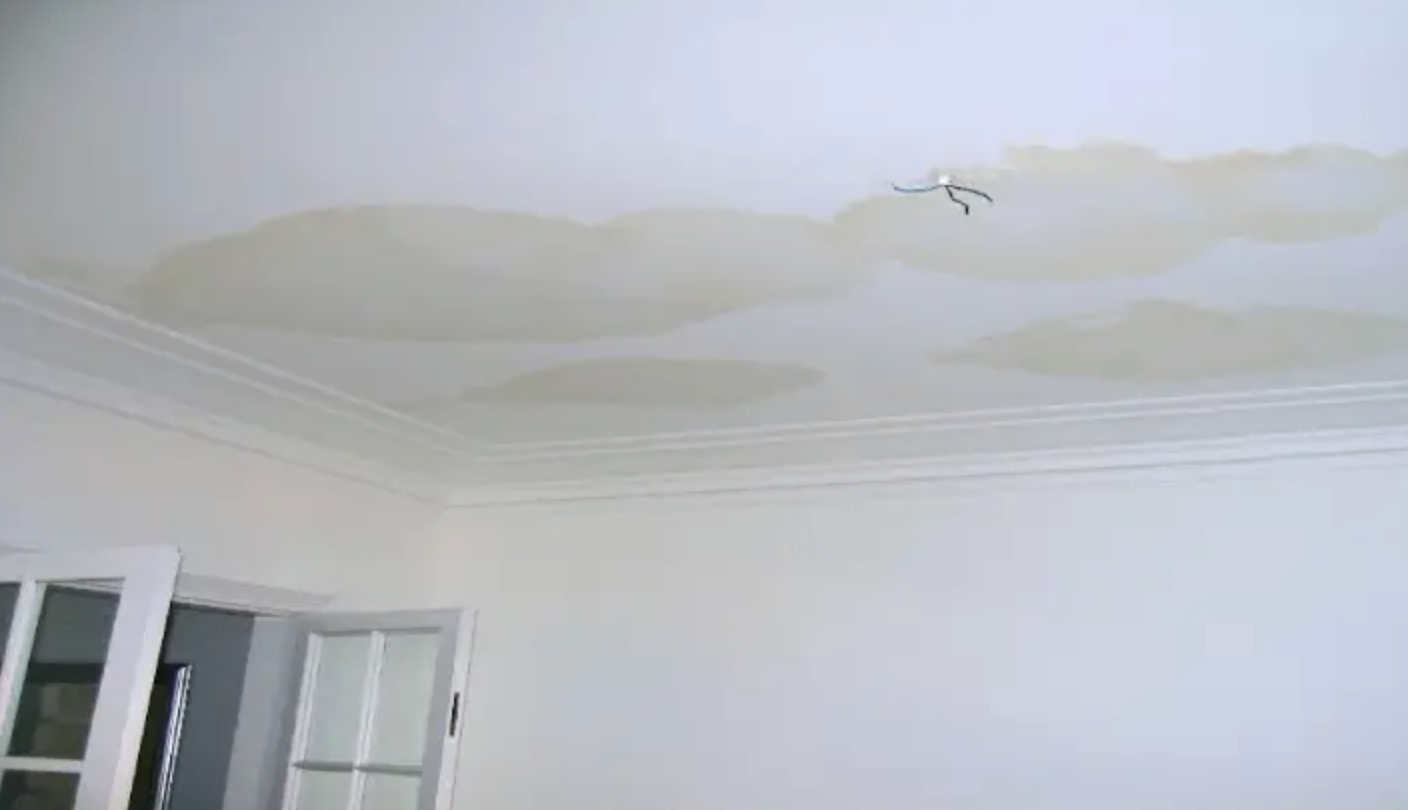
Those yellow or brown stains on your ceiling are almost always caused by water intrusion — a slow leak from a roof, plumbing pipe, or HVAC system that has soaked into your drywall and left behind mineral deposits and the early stages of mold growth. In Hurst and Fort Worth, Texas heat and storm cycles make this one of the most misdiagnosed problems in residential restoration. What Causes Yellow Stains on Your Ceiling? Yellow ceiling stains are caused by water saturating drywall or plaster and leaving behind dissolved minerals, rust, and organic matter as it dries — and the stain you see is almost never the full picture. The source is almost always one of the following: Roof leaks after hail, wind-driven rain, or deteriorated flashing around vents and chimneys Upstairs plumbing leaks from a slow-dripping supply line, wax ring failure, or pinhole pipe leak HVAC condensate overflow from a blocked drain line or cracked drain pan above your ceiling Ice dam infiltration — rare in North Texas but not unheard of after hard freezes Bathroom exhaust fans venting into attic space instead of outside, creating chronic condensation Old, improperly dried water damage from a previous event that was never fully remediated Are Yellow Ceiling Stains Dangerous? Yellow ceiling stains are a warning sign of active or past water intrusion — and where there is sustained moisture in drywall, mold growth typically follows within 24 to 48 hours. What looks like a cosmetic stain on the surface is often the visible edge of a much larger wet area inside your ceiling cavity. The drywall paper, wood framing, and insulation above that stain have been absorbing moisture — possibly for weeks — before the discoloration became visible to you. What Is the Difference Between a Yellow Stain and a Brown Stain on the Ceiling? Color tells you something about the source and age of the intrusion — yellow typically means recent or slow moisture, while dark brown or rust-colored rings suggest a longer-running or more severe leak. A yellow stain with a distinct darker ring around the edges is what restoration professionals call a "tide line" — the mineral deposit left behind each time the wet area expands and partially dries. Multiple tide lines mean the leak has cycled through wet and dry periods repeatedly, which almost always means active mold is present in the material above. Step-by-Step Homeowner Inspection: How to Investigate a Yellow Ceiling Stain You can safely gather critical information before your professional arrives — but do not cut into the ceiling or disturb any material that shows black or green discoloration. How to Find the Source of a Water Stain on Your Ceiling The source of a ceiling stain is rarely directly above the stain itself — water travels along framing, pipes, and insulation before it finds a low point to drip through. Map the stain's location precisely. Note which room it's in, how far it sits from each wall, and whether it's near a light fixture, vent, or ceiling fan. This is critical information your technician needs before ever opening the ceiling. Go directly above it. If there's a bathroom, laundry room, or kitchen above the stain, check under the sink, around the toilet base, and near the water supply lines for any signs of moisture or soft flooring. Access your attic if it is safe to do so. Bring a flashlight and look for wet or stained insulation, dark water trails on the underside of the roof decking, or discolored rafters directly above where the stain appears below. Wet insulation will look matted, dark, and feel heavier than dry insulation. Check your HVAC drain line and pan. If the stain is near an air handler or directly below an upstairs unit, locate the condensate drain pan. Any standing water or rust staining in the pan confirms overflow as a likely cause. Press gently on the stained drywall. If it feels soft, spongy, or gives under light pressure, the material has been wet long enough to lose structural integrity — do not press hard enough to break through, and call a professional immediately. Look for secondary staining. Check the walls directly below the ceiling stain and the corners of the room. Water that has saturated a ceiling cavity often wicks down wall framing — extending the hidden damage well beyond what the ceiling stain suggests. What a professional adds: Our technicians use calibrated moisture meters to measure exact moisture content levels inside your ceiling and wall assemblies without any destructive opening. FLIR thermal imaging cameras reveal the true boundary of wet material — which is almost always significantly larger than the visible stain. This data is essential for both proper drying and insurance documentation. The Hidden Danger of Ignoring a Yellow Ceiling Stain A yellow ceiling stain is not a cosmetic problem you can paint over — it is a structural and biological warning that escalates rapidly if the moisture source is not found and eliminated. What Happens Inside Your Ceiling When You Wait Too Long Every day a wet ceiling cavity goes unaddressed, the damage compounds in ways that multiply your remediation cost and health risk. Here is the progression we document on the job every week in Hurst and Fort Worth homes: Days 1–2: Drywall paper begins supporting mold colony growth. The stain is visible but the material still has structural integrity. Remediation at this stage is typically straightforward. Days 3–5: Mold penetrates through the drywall face into the paper backer and framing above. The musty odor becomes noticeable in the room below. HVAC circulation begins spreading spores to adjacent spaces. Days 5–10: Wood framing above the ceiling begins to show moisture content above 19% — the threshold at which structural rot becomes an active concern under IICRC S500 standards. Beyond 2 weeks: Ceiling drywall may begin to sag or bubble. Electrical fixtures penetrating the wet cavity — recessed lights, ceiling fans, smoke detectors — become shock and fire hazards. What began as a single-trade drying job now requires a general contractor, electrician, and certified remediator working together. One additional risk specific to North Texas: the hail and wind storms that cause roof leaks here often affect multiple penetration points simultaneously. A single storm can introduce moisture in three or four locations at once — meaning the stain you see may be one of several active leak points your insurer needs to know about. The Insurance Truth: Ceiling Stains and the Documentation Window You Can't Miss Most Texas homeowner policies cover sudden and accidental water damage from roof leaks and plumbing failures — but the documentation window is narrow, and missing it costs homeowners thousands. Why Your Insurer Needs Professional Moisture Documentation — Not Just Photos Insurance adjusters are trained to look for evidence of long-term neglect versus a sudden covered event — and without professional documentation, the burden of proof falls entirely on you. Here is what separates a paid claim from a denied one: Moisture meter logs proving elevated readings throughout the affected assembly — establishing that damage is active and ongoing, not pre-existing Thermal imaging reports showing the true scope of wet material, which adjusters use to authorize full replacement rather than surface-only repairs IICRC-compliant drying records demonstrating that all reasonable mitigation steps were taken promptly after discovery Cause-and-origin documentation connecting the ceiling stain to a specific covered peril — storm damage, sudden plumbing failure, or HVAC malfunction United Cleaning & Emergency Restoration provides complete claim documentation packages built to satisfy Texas Department of Insurance standards. We have worked alongside adjusters throughout the DFW Metroplex and know exactly what is required to get your claim fully covered — not just partially approved. Why Hurst and Fort Worth Ceilings Are Especially Prone to Water Staining The combination of severe weather exposure, aging housing stock, and extreme seasonal temperature swings makes North Texas one of the highest-risk regions in the country for ceiling water damage . Texas Hail Season and Your Roof Hurst and Tarrant County sit inside one of the most hail-active corridors in the United States — and a single hail event can compromise hundreds of shingles without creating an obvious visible breach from the ground. Granule loss from hail impact accelerates shingle deterioration and creates micro-cracks that don't produce an immediate leak but begin admitting moisture with every subsequent rain event. By the time a yellow stain appears on your ceiling, the roof has often been compromised for one or more full storm seasons. Freeze-Thaw Cycles and Pipe Vulnerability in North Texas While not a northern climate, Hurst and Fort Worth experience hard freezes several times each winter — and pipes in unconditioned attic spaces, exterior walls, and garages are genuinely vulnerable. The February 2021 winter storm is still producing ceiling stain claims in our area today — pinhole leaks from stress fractures in copper pipe that weren't immediately obvious but have been slowly seeping ever since. If your ceiling stain appeared or worsened after any winter freeze event, that is critical information for both your remediation team and your insurance carrier. Don't Paint Over the Problem — Find It. A yellow stain on your ceiling is your home's way of telling you something is wrong above it. Painting over it doesn't solve the moisture. It doesn't stop the mold. And it can actually complicate your insurance claim by obscuring the evidence an adjuster needs to see. Don't guess with your family's health. Call United Cleaning & Emergency Restoration at 817-268-6531 for a free quote today. We're available 24/7 for emergency response, and we bring professional moisture metering, thermal imaging, and full insurance documentation to every job — serving Hurst, Fort Worth, and all of the DFW Metroplex.
March 31, 2026
That musty smell — whether your house smells like old socks, damp earth, or stinks when the AC turns on — almost always means hidden moisture is feeding active mold or mildew growth somewhere inside your walls, ductwork, attic, or crawlspace. In Hurst and the greater Fort Worth area, high Texas humidity makes this one of the most common problems homeowners face. What Actually Causes That Musty Smell in Your Home? Mildew odor is caused by microbial volatile organic compounds (MVOCs) — gases released by mold and mildew colonies as they digest organic material. Even a colony too small to see can produce a powerful, persistent smell. In North Texas, the specific culprits we find most often are: Slow roof leaks saturating attic insulation or OSB decking HVAC condensate pan overflow — the reason your house stinks when the AC turns on Foundation moisture intrusion driven by hydrostatic pressure after heavy rain Plumbing leaks inside walls behind bathrooms, kitchens, and laundry rooms Poor crawlspace ventilation trapping ground moisture under your floors Improperly dried building materials from a past flood or water event Why Does My House Smell Like Old Socks or Wet Dog After Rain? That wet-dog or old-sock odor after rain is a classic sign of mold activated by moisture — often inside walls absorbing humidity from outside. Fort Worth and Hurst average over 36 inches of rainfall annually, and summer relative humidity routinely exceeds 70%. That sustained moisture load is enough to activate dormant mold spores on any organic surface — drywall, wood framing, duct liner — within 24 to 48 hours of a saturation event. Why Does My House Stink When the AC Turns On? AC-activated odor almost always points to mold or bacterial growth inside your air handler, evaporator coil, or ductwork — and it circulates spores throughout your home every time the system runs. The evaporator coil sits at roughly 40°F while humid Texas air passes over it, creating the perfect condensation environment. If the condensate line is even partially blocked, standing water collects in the drain pan — a petri dish sitting inside your ceiling or air handler cabinet. Step-by-Step Homeowner Inspection: What to Check Right Now You can gather valuable information before calling a professional — just stay safe and don't disturb anything that looks like active mold growth. How to Inspect Your Home for Mildew and Moisture Damage A 30-minute walkthrough covering these six areas will tell you a lot about where the problem is coming from. Attic first. Take a flashlight and look at the underside of your roof decking. Black or gray staining, discoloration on rafters, or insulation that looks matted and dark are red flags. Feel the insulation — it should not feel damp or heavy. Check your HVAC drain pan. Locate your air handler (usually in a closet, attic, or utility room). Look inside or below for standing water. A rusty ring in the pan means it has overflowed before. Inspect supply vents. Pull a few return-air vent covers off and shine your light inside. Dark spotting or visible fuzz on the duct lining is a significant finding. Look under sinks and behind toilets. Check for soft cabinet floors, water stains, or mineral deposits on supply lines — telltale signs of a slow, chronic leak. Walk the exterior foundation. Look for soil sloping toward your house rather than away from it. After rain, water pooling against your foundation creates hydrostatic pressure that forces moisture through concrete and slab cracks. The paper towel test. Press a dry white paper towel firmly against the lower section of drywall in your bathroom, laundry room, or near exterior walls. If it comes away with any moisture or gray/black transfer, you have active moisture intrusion. What a professional adds: Our technicians use calibrated moisture meters to detect elevated moisture content inside wall cavities without opening drywall, and FLIR thermal imaging cameras to map temperature differentials that reveal hidden wet spots behind surfaces. These tools routinely find damage that no visual inspection can catch. The Hidden Danger of Waiting 48 Hours to Address a Musty Smell Waiting even 48 hours after identifying a moisture problem is not a neutral decision — it is one that can dramatically increase health risks, structural damage, and your out-of-pocket costs. What Happens to Mold in 24–48 Hours Inside a Texas Home? Under ideal conditions — which North Texas summer heat and humidity readily provide — mold colonies can double in size every 24 hours once they have a sustained moisture source. Here is what that timeline looks like in practice: Hours 1–24: Mold spores activate. MVOCs begin off-gassing — that's the smell you're noticing. No visible growth yet. Hours 24–48: Colonies establish on drywall paper, wood framing, and insulation. Cross-contamination to adjacent cavities begins through your HVAC if the system is running. Hours 48–72: Structural cellulose materials — OSB, plywood, studs — begin to lose integrity. What was a surface remediation job becomes a structural drying and rebuild project. Beyond 72 hours: Electrical junction boxes inside wet walls become shock hazards. HVAC ductwork becomes permanently contaminated. Health exposure risks rise significantly for household members with asthma, allergies, or compromised immune systems. IICRC S520 standards define a Class 3 mold condition as one where the entire air space of a structure may be affected. Getting there from a minor leak in humid Texas heat takes days — not weeks. The Insurance Truth: Why Professional Documentation Is Non-Negotiable Most homeowner policies do cover sudden and accidental water damage — but claims are routinely denied or underpaid when the damage cannot be properly documented at the time of the event. How Professional Moisture Documentation Protects Your Insurance Claim Without a certified professional's moisture mapping on file, your insurer has no obligation to pay for hidden damage — only what's visible to the naked eye. Here is what professional documentation provides that your phone camera cannot: Timestamped moisture meter readings at dozens of points, creating a legal record of the affected area's scope Thermal imaging reports showing moisture migration paths behind walls and ceilings IICRC-compliant drying logs that satisfy the "reasonable steps to mitigate" requirement in most Texas policies A written scope of work corresponding to industry-standard Xactimate pricing — the same software your adjuster uses United Cleaning & Emergency Restoration provides full documentation packages built specifically to support insurance claims. We work directly with adjusters so you don't have to fight for what you're owed. Why Hurst and Fort Worth Homes Are Especially Vulnerable to Mildew Problems North Texas climate creates a near-perfect environment for moisture intrusion and mold growth — and most homeowners don't realize it until the smell is already there. Texas Humidity, Expansive Clay Soils, and Your Foundation Hurst sits on the same expansive black clay soil that runs throughout Tarrant County — soil that absorbs and releases enormous amounts of water, creating constant hydrostatic pressure against your foundation. During wet springs and after late-summer storm systems, that pressure forces moisture through hairline cracks in slab foundations and block walls. Add an HVAC system that runs nine months a year, and you have an ideal environment for chronic moisture cycling — a pattern we see constantly in homes throughout Hurst, Euless, and Bedford. Summer AC Season: The Mildew Incubation Window When your AC runs continuously from May through September, it pulls enormous volumes of warm, humid outside air across a cold evaporator coil — and any organic debris in that system becomes a mold substrate. This is precisely why so many Hurst homeowners notice the smell peaking in late summer. The system has been running for months, slowly cultivating a colony no one can see. Don't Guess With Your Family's Health. A musty smell is your home asking for help. The longer you wait, the larger the colony grows, the deeper the moisture penetrates, and the harder it becomes to document for insurance. If you need a mold removal team in DFW, we'll happily get the job done. Call United Cleaning & Emergency Restoration at 817-268-6531 for a free quote today. We offer 24/7 emergency response, professional moisture metering, thermal imaging, and full insurance documentation — serving Hurst, Fort Worth, and all of the DFW Metroplex.